
World Premiere Run Review: Gregory Spears’ “The Righteous”, Santa Fe Opera, July 26, 2024

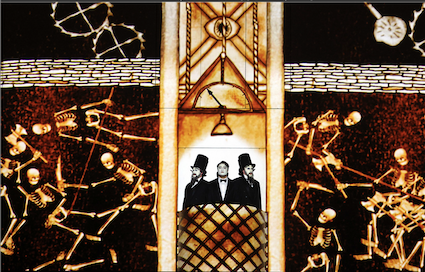
Virtually every opera ever composed since the art form was invented 420+ years ago failed to make the international performance repertory – those operas that well-regarded opera companies have chosen to perform periodically. Over the past two decades, since the creation of this website, I have posted performance reviews of the world premieres or world … Read more

Review: Jonah Hoskins, Yaritza Véliz Lead Joyous “L’Elisir d’Amore” – Santa Fe Opera, July 27, 2024

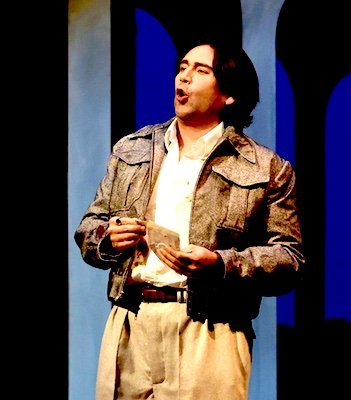
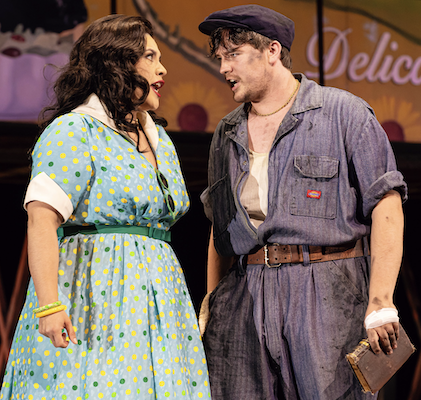
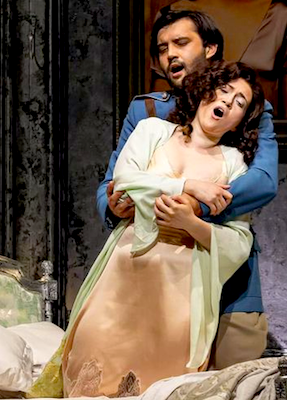
The Santa Fe Opera, for only the third time in the company’s 67 year history presented Donizetti’s romantic comedy “L’Elisir d”Amore [The Elixir of Love]”. Jonah Hoskins’ Nemorino The production chosen was an update of Stephen Lawless’ production of 15 years prior, in which the lead male role, the lovesick Nemorino, is an autmobile garage … Read more

Review: A Spectacular “Der Rosenkavalier” – Santa Fe Opera, July 24, 2024

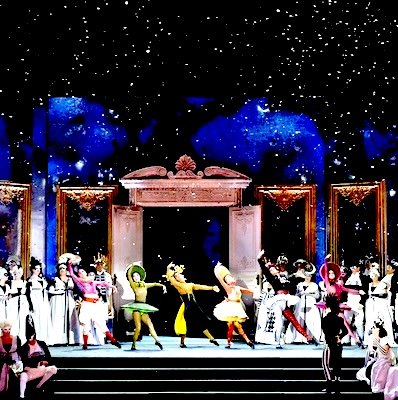
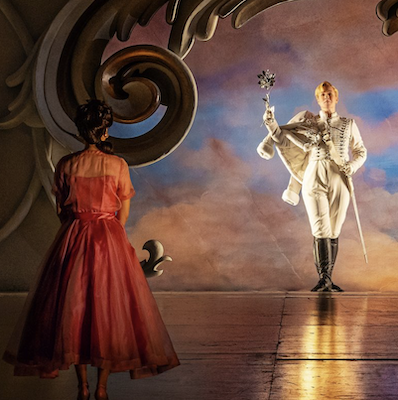
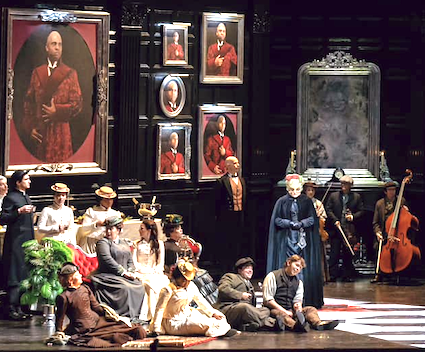
The Santa Fe Opera imported an elegant production of Richard Strauss’ “Der Rosenkavalier” that premiered in 2021 at England’s Garsington Opera. “Rosenkavalier” can be considered as three intertwined stories, skillfully integrated by the Austrian team of composer Richard Strauss and librettist Hugo von Hoftmanstahl. The first story is that of the Marschallin, who begins the … Read more

Review: A Brilliant Production and Strong Performance of Handel’s “Partenope” – San Francisco Opera, June 23, 2024

Sab Francisco Opera continued its commitment to presentation of baroque operatic masterpieces by reviving Christopher Alden’s popular production of Handel’s “Partenope”, one of the hits of the company’s 2014 season. Christopher Alden’s Production Christopher Alden’s production of Handel’s “Partenope” was first performed at the English National Opera in 2008. My performance reviews of both the … Read more

Review: Barrie Kosky’s Production of Mozart’s “The Magic Flute” – San Francisco Opera, June 2, 2024

For the past dozen years, Australian director Barrie Kosky’s production of Mozart’s last opera, “The Magic Flute” (Die Zauberflöte) has traveled widely, being performed by opera companies large and small worldwide. I covered the Kosky production’s 2013 American premiere at the Los Angeles Opera [Review: Outrageously Inventive, Unceasingly Entertaining – Kosky/Andrade/Barritt’s Silent Movie “Magic Flute” … Read more

American Premiere Review: Saariaho’s and Oksanen’s “Innocence”- a Milestone in the Dramatic Possibilities of Operatic Performance – San Francisco Opera, June 1, 2024

The opera “Innocence” begins with a wedding celebration in Helsinki, Finland, but the central story is about the continued impact of an event that took place ten years earlier. As the story unfolds, we learn that the bridgegroom’s older brother, in reaction to being bullied and humiliated by fellow students at a nearby international school, … Read more

Review: Donizetti’s Delightful, ‘Must See’ “Elixir of Love” Starring Pene Pati and Slatka Zamecnikova – San Francisco Opera, November 19, 2023

Donizetti’s most famous romantic operatic comedy “L’Elisir d’Amore” The Elixir of Love] returned to the War Memorial Opera House. The bel canto opera has not been performed here in the last decade and a half. (This was the opera’s longest omission from the San Francisco Opera’s performance repertory of the past 75 years). The opera … Read more

Review: Ovations for “Omar”, Giddens’ and Abels’ Remarkable Opera – San Francisco Opera, November 5, 2023

The opera “Omar”, whose world premiere took place at Charleston, South Carolina’s Spoleto Festival only a year and a half prior to this performance, proved to be one of the most exciting 21st century operatic works to be performed so far by the San Francisco Opera.

The opera is loosely based on the life of the enslaved Muslim, Omar ibn Said. He was a member of a nomadic West African tribe that had been converted to Islam nine centuries before Omar’s birth. Omar was trained from age 12 as an Islamic scholar, and was fluent in spoken and written Arabic. Captured at age 37 by slavers and sold to American plantation owners, it is Omar’s prolific output of Arabic works (now in the Smithsonian Institution), written while in slavery, that has made his story so unique and profoundly absorbing

Rhiannon Giddens’ Composition and Libretto

[Photo: Co-composer and librettist Rhiannon Giddens; edited image, based on an Ebru Yildiz photograph, courtesy of the San Francisco Opera.]

The opera “Omar”, co-commissioned by the San Francisco Opera in league with six other American operatic companies, is the work of two “co-composers”, the multi-talented musicians, Rhiannon Giddens and Michael Abels.

Both composers have professional backgrounds atypical of virtually all other opera composers. Giddens’ wide-ranging musical accmplishments, include bluegrass and folk music.

Giddens has performed at Nashville’s Grand Ole Opry as a member of a trio of artists continuing the Black string band traditions that predate the Civil War.

Michael Abels’ Composition

[Photo: Co-composer Michael Abels; edited image, based on an Eric Schwabel photograph, courtesy of the San Francisco Opera.]

Composer Michael Abels, in addition to his collaboration with Giddens on “Omar” is famous for the unique style of his acclaimed musical scores for the Hollywood films of director Jordan Peele “Get Out”, “Us” and “Nope”. .

Jointly, Giddens and Abels have produced an opera, whose remarkable libretto is matched with beautiful vocal writing and superb, brilliantly rhythmic and melodic orchestration.

Jamez McCorkle’s Omar

[Photo: Jamez McCorkle as Omar; edited image, based on a Cory Weaver photograph, courtesy of the San Francisco Opera.]

Louisiana lyric tenor Jamez McCorkle proved to a be dramatically confident Omar. Onstage most of the performance, McCorkle, through Omar’s appeals to Allah and his resignation to his fate (‘The whirlwind has me’) effectively conveyed the humanity of a soul existing in an inhumane world.

McCorkle’s repertory confirms a voice with the vocal flexibility to perform Tamino in Mozart’s “The Magic Flute” and the power to sing the role of Bacchus in Richard Strauss’ “Ariadne auf Naxos”. His performance as Omar demonstrated his vocal expressiveness and security.

Brittany Renee’s Julie

[Photo: Brittany Renee as Julie; edited image, based on a Cory Weaver photograph, courtesy of the San Francisco Opera.]

Minnesota soprano Brittany Renee displayed a vocally expressive voice of inherent beauty, incorporating a soft, beautiful vibrato. Renee’s artistry showed brilliantly in Julie’s affecting aria My Daddy Wore a Cap Like Yours, when Julie recognized that Omar is wearing a Muslim prayer-cap.

It is the character Julie that persuades Omar to escape the harsh Charleston environment to Fayetteville, North Carolina and to seek the Owen plantation there.

Taylor Raven’s Fatima

[Photo: Taylor Raven as Omar’s mother Fatima; edited image, based on a Cory Weaver photograph, courtesy of the San Francisco Opera.]

Mezzo-soprano Taylor Raven, herself a native of the Fayetteville region of North Carolina in which the opera’s second act is centered, performed the role of Omar’s mother Fatima with graceful poise. Although Fatima is is killed by slavers in the first scene, Raven’s Fatima reappears periodically.

Raven made her San Francisco Opera debut in a world premiere the previous season [World Premiere Run Review: Adams’ “Antony and Cleopatra” – San Francisco Opera, September 18, 2022], having previously performed with distinction in such roles as Annio at the Los Angeles Opera [Review: Ovations for Los Angeles Opera’s “Clemency of Titus”: Impressive Singing, Stylish New Production, March 2, 2019]

Daniel Okulitch’s Johnson/Owen and Barry Banks’ Auctioneer/Taylor and Laura Krumm’s Eliza

[Photo: Eliza (Laura Krumm, right) convinces her father, Owen (Daniel Okulitch, left) to add another person to his plantation as Taylor (Barry Banks, center) looks on in approval; edited image, based on a Cory Weaver photograph, courtesy of the San Francisco Opera.]

T

Canadian baritone Daniel Okulitch and British tenor Barry Banks each portrayed two characters, one villainous, one more sympathetic. At a slave auction in Charleston, Banks was the Slave Auctioneer and Okulitch the mean-spirited slaveowner Johnson. Both artists performed characters in the Fayetteville scenes, Okulitch as Owen and Banks as Taylor, who, even though part of a slaveowning society, did not share Johnson’s inhumanity.

I have long admired Okulitch’s ability to create vivid characters, in operas from the late 20th and early 21st centuries [Review: Loving “The Last Savage”: Over the Top Menotti Charms at Santa Fe Opera – August 5, 2011] and [Review: Dissecting “The Fly” – the American Premiere of Shore’s Opera, Los Angeles Opera, September 7, 2008] and [World Premiere Review: “JFK”, a Fort Worth Fantasy – April 23, 2016], as well as more traditional operatic fare [Review: Okulitch, Ketelsen Star in Santa Fe Opera’s New “Don Giovanni”, July 2, 2016].

Barry Banks’ roles are similarly rich and varied, with a mix of new roles such as Hades [World Premiere Review: Matthew Aucoin’s “Eurydice” at the Los Angeles Opera, February 1, 2020], with roles as varied as Tonio [Review: Claycomb, Podles, Banks Shine in Houston Grand Opera “Fille du Regiment” – November 3, 2007], the Astrologer [Review: Santa Fe Opera’s Glistening “Golden Cockerel” Starring Venera Gimadieva – July 28, 2017] and Truffaldino [Review: Opera Philadelphia’s Richly Melodic, Laugh-filled “Love for Three Oranges” – September 20, 2019].

Earlier, Krumm was impressive in one of the most interesting comprimario roles in Czech opera, the Kitchen Boy in “Rusalka” [Review: “Rusalka”- Beautiful Singing, Insightful Drama – An Opera “Not to be Missed” – San Francisco Opera, June 16, 2019].

Norman Garrett’s Abdul/Abe

[Photo: Norman Garrett as Omar’s brother Abdul; edited image, based on a Cory Weaver photograph, courtesy of the San Francisco Opera.]

Texas baritone Norman Garrett made a forceful impression as Abdul. Attempting to guide slave traders away from his own tribal community and towards others, Abdul sadly discovered the perils of trying to negotiate with evil forces. Garrett also performed the role of Abe.

Elsewhere, Garrett’s dramatic baritone voice had been enlisted for a strong performance as the villainous Crown [Review: Glimmerglass Festival “Porgy and Bess”: Ngqungwana, Trevigne Lead Strong Cast for New Zambello Production – July 13, 2017].

Edward Graves’ Amoudou, Calvin Griffin’s Olufemik, Kenneth Overton’s Suleiman and Other Cast Members

Ohio bass-baritone Calvin Griffin was Olufemi. I have followed Griffin’s career ever since he was an apprentice artist at Santa Fe Opera in 2014 and 2015 and a Glimmerglass Festival young artist in 2016 and 2017. His Glimmerglass role as Elviro was especially noteworthy [Review: An Elegantly Performed Glimmerglass Festival “Xerxes” – July 15, 2017].

Maryland tenor Edward Graves was Amadou. I have seen Graves’ performances during his two year San Francisco Opera Adler Fellowship in Wagner’s “Lohengrin”, Verdi’s ‘Il Trovatore” and “La Traviata”, and three roles at the 2019 Glimmerglass Festival,

Pennsylvania baritone Kenneth Overton was Suleiman. I have cited his previous appearances at San Francisco Opera in 2008 (George Gershwin’s “Porgy and Bess”) 2010 (Puccini’s “La Fanciulla del West”) and 2019 (Britten’s “Billy Budd”).

New Jersey mezzo-soprano (and former Washington National Opera Cafritz Young Artist) Rehanna Thelwell was Kobe Ellen and a Caller.

Kiera Benn’s Choreography and “Omar’s” Dancers

[Photo: dancers, from left, are James Johnson, Micah Mock, Coral Martin and Marlayna Locklear; edited image, based on a Cory Weaver photograph, courtesy of the San Francisco Opera.]

New York choreographer Kiara Benn was the creative force behind the opera’s frequent dance sequences. Dancer Jermaine McGhee appeared at several points in the opera bedecked in a colorful costume as an Ancestral Figure.

Other featured dancers included Illinois dancer James Johnson, Wisconsin dancer Marianna Locklear, California dancer Carol Martin and California dancer Micah Mock.

Co-composer Giddens has described the importance of square dancing in North Carolina’s social history. Significantly, the opera incorporates lively sequences that underscore Giddens’ premise. The dances further evoke memories of Floyd’s opera “Susannah” [Review: Racette, Aceto, Jovanovich in Brilliant New Production of “Susannah” – San Francisco Opera, September 6, 2014]. Most of “Omar” and all of “Susannah” take place in the Eastern region of America’s Old South.

San Francisco Opera’s dance master is Irish choreographer Colm Seery.

“Omar’s” Chorus Soloists

[Photo: Omar (Jamez McCorkle (center left in white garment) surrounded by members of the “Omar” chorus; edited image, based on a Cory Weaver photograph, courtesy of the San Francisco Opera.]

;

A mix of artists represent both the San Francisco Opera regular and extra choruses and visiting artists. Pennsylvania Chorus Master John Keene heads San Francisco Opera’s Regular and Extra Choruses

The “Omar” chorus members are often onstage, sometimes representing West African or slave populations.

Visiting artists include California tenor Christopher Craig, California tenor John Fluker, New York basso cantante Earl Hazell, Pennsylvania tenor Ernest C. Jackson, Jr., California mezzo-soprano Jessica-Elizabeth, California mezzo-soprano Joanna Lynn-Jacobs, California soprano Thalia Moore and Texas soprano Sydnee Turrentine-Johnson

San Francisco Opera regular choristers include California mezzo-soprano Aleta Braxton, Minnesota baritone Wiliam Lee Bryan, California baritone John Fulton and Florida bass-baritone Wilford Kelly. The slaveship crewmen were San Francisco Opera regular choristers, Rhode Island baritone William O’Neill and Missouri tenor Chester Pidduck.

San Francisco Opera extra choristers included Califonria mezzo-soprano Melissa Dufort and Alexander Taite and California soprano Chloe Vaught.

Maestro John Kennedy and the San Francisco Opera Orchestra

[Photo: Maestro John Kennedy; edited image of a publicity photograph, from the Spoleto Festival].

Maestro John Kennedy, who conducted the Spoleto Festival’s “Omar” world premiere, led an impassioned performance by the San Francisco Opera Orchestra. Maestro Kennedy has a principal role in the annual Spoleto Festivals in Charleston. It was there that I reported on his conducting of the American premiere of a Liza Lim opera [Review: Elliot Madore, Marisol Montalvo Perform Liza Lim’s “Tree of Codes” – Spoleto Festival-USA, June 4, 2018.]

The “Omar” score is rich in solo opporutnities accompanying the action on stage for the principal instrumentalists. Especially praiseworthy was a beautifully performed quartet consisting of concertmaster Kay Stern, Second Violin principal Jeremy Preston, Viola principal Carla Maria Rodrigues and Cello associate principal Thalia Moore.

Director Kaneza Schaal and Production Crew

[Photo: Director Kaneza Schaal; edited image of a Bart Michiels Studio photograph, courtesy of the San Francisco Opera.]


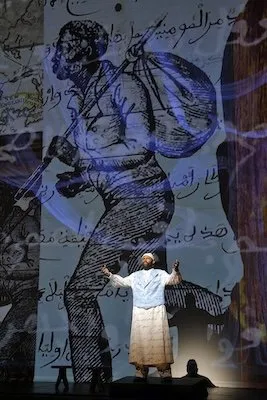
New York director Kaneza Schaal coordinated the the complex production, much of it organized around Arabic writing, and West African Muslim images.

The costumes, many of them covered with written Arabic script, were created by Colorado designer April M. Hickman and Illinois designer Micheline Russell-Brown.

Mexican designer Pablo Santiago created the lighting, Massachusetts designer Joshua Higgason, the projections. Caifornia director Dave Maier choreographed fight sequences.

Christopher Myers’ Scenic Design

[Photo: Designer Christopher Myers; edited imChristoage of a publicity photograph.]

The fluid sets were created by New York designers Christopher Myers and Pennsylvania designer Amy Rubin.

Recommendation

The operatic art form’s roots are based in Europe. Although the story lines of many operas take place in exotic, non-European locales, those locales predominantly reflect European imagination of what those locales are like.

“Omar” is based on autobiographical information written by an enslaved, literate, African scholar, fluent in Arabic and in Muslim teaching. One of the opera’s scenes take place in a part of West Africa where literate Africans of Muslim faith are preyed upon by slave traders. Other scenes takes place in slave-owning communities of the Southeastern United States.

Neither the slave trade nor slaveholding presently exist, but we have ample documentation that informs this opera’s libretto. We can be confident that the opera’s story truly portrays a man who existed, and whose sobering story is one we should know. That Omar’s story is accompanied with a melodious, nicely orchestrated operatic score that is always interesting and often inspiring is a further bonus.,

[Photo: Jamez McCorkle as Omar in front of the image of an escaped slave; edited image, based on a Cory Weaver photograph, courtesy of the San Francisco Opera.]
I recommend the opera to both the veteran opera-goer and the person new to opera.

Review: A Musically, Visually Satisfying “Lohengrin” – San Francisco Opera, October 15, 2023

Wagner’s “Lohengrin” is a supernatural opera about a mysterious knight, Lohengrin, in the service of angels who protect the Holy Grail. Transported by a boat pulled by an enchanted swan, the knight intervenes in the trial of a woman accused of murdering her brother, by challenging the woman’s accuser to a trial by combat. The … Read more

Review: Aural Splendor Permeates Composer Mason Bates’ Revised “(R)evolution of Steve Jobs” – San Francisco Opera, September 24, 2023

San Francisco Opera’s home, the War Memorial Opera House, is a hospitable venue for the walls of sound that emanate from the richly orchestrated works of Wagner, Puccini and Richard Strauss. It proved equally hospitable to the extraordinary operatic heavy metal sound created by the technologically-savvy composer Mason Bates. The composer’s electronic instrumentation proved a … Read more

Review: Luke Sutliff, Replacing Injured Rolando Villazón, Triumphs in Opening Night of Monteverdi’s “Orfeo” – Santa Fe Opera, July 29, 2023

The fifth opera to be offered in Santa Fe Opera’s 2023 season, Monteverdi’s “Orfeo”, dating from 1607, is the oldest opera holding a space in the international performance repertory. Never before performed by the company, a new production was designed by director Yuval Sharon and new orchestration was created by contemporary composer Nico Muhly. Luke … Read more

Review: Passionately Sung, “Pelléas et Mélisande” in Netia Jones’ Attractive, Introspective Production – Santa Fe Opera, July 28, 2023

The Santa Fe Opera, for the third time in its history (the first and second being 51 and 46 years ago) performed Debussy’s operatic masterpiece, “Pelléas et Mélisande”, in a new production created by British director Netia Jones. Jones’ attractive production, incorporating an absorbing lighting design by Canadian designer D. M. Wood, explores the contemporary … Read more

Review: Ailyn Perez Leads Vocally Splendid Cast in Pountney’s Alternative Vision of “Rusalka” – Santa Fe Opera, July 26, 2023

I am reporting on the second performance of the Santa Fe Opera’s first mounting of Dvorak’s “Rusalka” in its history. It is a new production from British-Polish director Sir David Pountney. Although Santa Fe Opera’s production is new, it incorporates the main elements of Pountney’s 1983 “Rusalka”, created when Pountney was English National Opera’s newly … Read more

Review: Nicholas Brownlee, Elza van den Heever Lead a Vocally Splendid Cast for Director David Alden’s New Production of “Flying Dutchman” – Santa Fe Opera, July 1, 2023

The second night of the Santa Fe Opera’s 2023 season was devoted to a new David Alden production of Wagner’s “The Flying Dutchman (Der fliegende Holländer)”, last performed by the company 35 years ago. Nicholas Brownlee’s Dutchman) Alabama bass-baritone Nicholas Brownlee is cast as the mysterious Dutchman. The role’s dark first aria Die frist ist … Read more

Review: A Well-Sung “Tosca” Starring Leah Hawkins, Joshua Guerrero, Reginald Smith, Jr. and Blake Denson – Santa Fe Opera, June 30, 2023

To open the Santa Fe Opera’s 2023 season, a strong cast was assembled for Keith Warner’s new production of Puccini’s “Tosca”.

Leah Hawkins’ Tosca

Pennsylvania soprano Leah Hawkins was an engaging Tosca. She displayed a voice of dramatic power and acted with the self-assurance of a celebrated diva. Hawkins proved convincing in each facet of Tosca’s complex personality – Tosca’s recollections of serene moments at her lover’s villa, her all-consuming jealousy, her description of her musical passion in her beautifully sung aria Vissi d’arte, and her determination to use lethal force to protect herself from the lascivious miscreant, Scarpia.

[Below: Leah Hawkins as Floria Tosca; edited image, based on a Curtis Brown photograph, courtesy of the Santa Fe Opera.]

Hawkins is an alumna of both Washington National Opera’s Cafritz and Metropolitan Opera Lindemann Young Artists’ programs. I first reviewed a Hawkins performance seven years ago at New York’s Glimmerglass Festival. There she sang a secondary role in Rossini’s “La Gazza Ladra (The Thieving Magpie)”.

Hawkins is currently scheduled for principal roles in regional opera companies. This summer’s performances at the Santa Fe Opera without doubt will increase her reputation as a rising dramatic soprano star.

Joshua Guerrero’s Mario Cavaradossi

California tenor Joshua Guerrero brought a muscular tenor voice with baritonal depth to Mario Cavaradossi. He drew audience ovations for his stylish interpretations of both his first act aria Recondita armonia and the final act’s E lucevan le stelle.

[Below: Joshua Guerrero as Mario Cavaradossi; edited image, based on a Curtis Brown photograph, courtesy of the Santa Fe Opera.]

Guerrero and Hawkins were convincing in their first act scene, in which Tosca and Mario look forward to a romantic encounter at his villa later in the day.

[Below: Tosca (Leah Hawkins, left) and Mario (Joshua Guerrero, right) in one of their last moments of happiness; edited image, based on a Curtis Brown photograph, courtesy of the Santa Fe Opera.]

In Warner’s rough-house staging, even though Cavaradossi’s torture occurs out of audience view, Guerrero endures physically aggressive stage action, including being dragged by his legs across part of the stage. [The program lists Rick Sordelet, Christian Kelly-Sordelet and Shireen Yehya all as “fight and intimacy directors” who were presumably involved.]

Later, the firing squad scene proved especially realistic, with bloody bullet wounds appearing on Guerrero’s shirt the moment shots are fired.

[Below: Tosca (Leah Hawkins, left) cries in terror as she realizes that Mario Cavaradossi (Joshua Guerrero has been shot to death; edited image, based on a Curtis Brown photograph, courtesy of the Santa Fe Opera.]

This is the sixth performance over the past nine years I have seen Guerrero in what is a succession of increasingly important roles. A Los Angeles Opera Domingo-Colburn-Stein Young Artists Program alumnus, I praised his performances as the Count Almaviva [Review: Los Angeles Opera Launches Ambitious New Production of “Ghosts of Versailles” – February 7, 2015] and the Greenhorn, Ishmael [Review: Maestro Conlon Captains Another Successful Launch for Heggie’s “Moby Dick” – Los Angeles Opera – November 22, 2015]. His previous principal role at the Santa Fe Opera was Gounod’s Roméo [Review: A Surprise at Santa Fe Opera – Joshua Guerrero joins Pérez, Aceto in Gounod’s “Roméo et Juliette”, July 29, 2016.]]

Reginald Smith, Jr.’s Baron Scarpia

Georgia baritone Reginald Smith, Jr.’s Santa Fe Opera debut took place in one of the iconic roles of the dramatic baritone repertory. Smith made a strong impression, vocally and dramatically, as the villanous Baron Scarpia.

Smith effectively delineated Scarpia’s internal conflict. Scarpia holds the official position as agent of a repressive state pursuing an escaped political prisoner. In the course of pursuing his duties, he will not pass up opportunities to fulfill his sexual lust, awakened by the appearance of Tosca.

[Below: The Baron Scarpia (Reginald Smith, Jr., left) offers holy water to Floria Tosca (Leah Hawkins, right); edited image, based on a Curtis Brown photograph, courtesy of the Santa Fe Opera

One of Smith’s especially effective moments was his first act monologue Va, Tosca!, sung in church during the procession accompanying a mass. Smith’s self-centered Scarpia reveals how his lust for Tosca consumes him. (To emphasize this, Director Warner departs from traditional staging, by having clergy and parishioners completely surround Scarpia at the end of the aria.)

[Below: Reginald Smith, Jr. as the Baron Scarpia; edited image, based on a Curtis Brown photograph, courtesy of the Santa Fe Opera.]

Another departure from tradition (and Puccini’s stage directions) is Scarpia’s demise. Rather than stabbing Scarpia with a knife, in this production Tosca garrotes him.

[Below: Tosca (Leah Hawkins, left) strangles the Barpn Scarpia (Reginald Smith, Jr. with a cord; edited image, based on a Curtis Brown photograph, courtesy of the Santa Fe Opera.]

Smith is another young artist who has assembled an impressive resume. He is a winner of the Metropolitan Opera National Auditions, a Grammy winner for his role in a recording of George Gershwin’s “Porgy and Bess”, and an alumnus of the Houston Grand Opera Studio. I have seen him in three smaller character roles. He was Blind the lawyer in Johann Strauss’ “Die Fledermaus” and Marullo in Verdi’s” “RIgoletto” at Houston Grand Opera. He was “Rigoletto’s” Monterone at the San Francisco Opera.

Building on those character roles, Smith’s successful assumption of Scarpia demonstrates a career in its ascendancy.

Blake Denson’s Angelotti

Kentucky baritone Blake Denson, as Angelotti, is the third of the principal singers making a Santa Fe Opera debut. In Warner’s surreal staging, Denson’s Angelotti, descends from a tower (representing the prison from which he has just escaped) directly into the church in which the first act takes place.

Like his colleagues, Denson demonstrated a power voice. His busy international performance schedule is concentrated in comprimario “character” roles. I have no doubt he soon will be assuming principal roles at major venues.

[Below: Blake Denson is Cesare Angelotti; edited image, based on a Curtis Brown photograph, courtesy of the Santa Fe Opera.]

Read more

A “Second Look” Review: Amon Miyamoto’s Insightful Production of “Madama Butterfly” – San Francisco Opera, June 18, 2023

Earlier this month I reviewed the opening performance of San Francisco Opera’s mounting of Amon Miyamoto’s production of a Puccini masterpiece [Review: Karah Son, Michael Fabiano Lead Brilliant Cast in Amon Miyamoto’s Fascinating Production of “Madama Butterfly” – San Francisco Opera, June 3, 2023] Fifteen days later, I attended a second performance with the identical … Read more

Review: Daniela Mack, San Francisco Opera Chorus Shine in “El Último Sueño de Frida y Diego”, San Francisco Opera, June 17, 2023

The final opera to be presented in the San Francisco Opera’s centennial season, “The Last Dream of Frida and Diego” by California composer Gabriela Lena Frank and Cuban librettist Nilo Cruz, is the first opera in company history to be performed in Spanish. The opera is a co-production with the San Diego Opera, where the … Read more

Review: A Colorful, Brilliantly Performed “Frau ohne Schatten” – San Francisco Opera, June 4, 2023

San Francisco Opera’s first 21st century performances of Richard Strauss’ “Die Frau ohne Schatten” revive a work that had been performed by the company in six seasons between 1959 and 1989. The 2023 revival secured a production new to San Francisco built around British artist David Hockney’s scenic design. The production was created for the Royal … Read more

Review: Orlinski’s Astounding, Acrobatic Orfeo: “Orfeo ed Euridice”, San Francisco Opera, November 20, 2022

The operas of Christoph Willibald Gluck have rarely been performed by the San Francisco Opera. Gluck’s most famous opera, “Orpheus and Eurydice”, received only a couple of stage performances in a 1959 production. For the company’s centennial season, San Francisco Opera presents it in its original 1762 Italian version, “Orfeo ed Euridice”, which premiered in … Read more