Eight days after my first ever performance of Mozart’s “The Magic Flute”, I was back at the War Memorial Opera House for my first ever performance of Ponchielli’s “La Gioconda”. Of the twelve operas I would see (either once or twice) during the San Francisco Opera’s Fall 1967 season, nine of them would be “firsts” for me.
Leyla Gencer’s Gioconda
The celebrated Turkish soprano Leyla Gencer sang the role of Gioconda beautifully, demonstrating dramatic poise and vocal security. Gencer projected a passionate woman capable of self-sacrifice for persons whom Gioconda loved (her mother La Cieca and Enzo Grimaldo) or to whom she showed gratitude for another’s assistance at a life-threatening moment (Laura).
Gencer’s delivery of O Suicido, one of the mid-19th century’s greatest arias, was chillingly effective.
[Photo: Leyla Gencer as La Gioconda in the 1967 San Francisco Opera performances of Ponchielli’s “La Gioconda”; edited image, based on a San Francisco Opera production photograph from the Leyla Gencer Archives.]

This was my first time iin a decade attending a Gencer performance, she being my first Violetta [Historical Performances: San Francisco Opera’s “La Traviata” in San Diego Stars Leyla Gencer, Robert Merrill – October 31, 1957] and my first Lucia di Lammermoor [Historical Performances: Leyla Gencer’s Stunning “Lucia” at Los Angeles’ Shrine Auditorium – November 10, 1957].
Gencer had made her mark on San Francisco Opera history, first in 1956, replacing an ailing Renata Tebaldi for all scheduled performances of Zandonai’s “Francesca da Rimini”.
Gencer’s services were secured for the following year, in what all evidence suggests was part of a defensive strategy by the company’s general manager, Kurt Herbert Adler, to save the opera season should soprano Maria Callas fail to show (as did happen) for her scheduled performances [see my Historical Performances: Callas Fired, An Opera Changed – San Francisco Opera’s “Aida” at San Diego’s Fox Theater, November 7, 1957 for further discussion of this subject.]
Renato Cioni’s Enzo Grimaldo
Italian lyric tenor Renato Cioni was a handsome presence, although possessing a lighter voice than I would have expected for the role of the nobleman Enzo Grimaldo. That said, Cioni ardently performed the role’s showpiece aria, Cielo e mar, another one of the greatest arias of the mid-19th century.
Cioni’s Enzo believing Laura, the woman he loved, to be dead, Cioni was effective in the concerted finale of Act 3. Enzo begins the finale with his solo Gia ti vego immota e smorta, one of Ponchielli’s most sublime melodies, then is joined by the San Francisco Opera Chorus in a rousing chorus.
[Photo: Although Enzo Grimaldi (Renato Cioni, left) is the object of affection of Gioconda (Leyla Gencer, right), she will give her life to protect his happiness; edited image, based on a San Francisco Opera production photograph from the Leyla Gencer Archives.]

Cioni was a favorite tenor of some of the major divas of the day, including Maria Callas and Joan Sutherland. According to the Australian director Ian Campbell, Cioni inadvertantly advanced the career of another Italian tenor, Luciano Pavarotti, whose San Francisco Opera debut occurred later in the 1967 fall season
Three years prior, Cioni was scheduled to appear with Sutherland at the Florida Grand Opera. At that same time, Callas wanted Cioni as her tenor for her 1964 operatic “comeback” performances in England. An arrangement was made to send Cioni to London, in exchange for Pavarotti replacing Cioni in Florida, Pavarotti thereby becoming a Sutherland protege. [For the full story, see see my Interview with San Diego Opera’s Ian Campbell, Part II].
In previous seasons, Cioni had been my first Ismaele [Historical Performances: Bastianini’s “Nabucco”, with Tozzi, Cioni and Janis Martin – San Francisco Opera, October 23, 1961], my first Rodolfo [Historical Performances: de los Angeles, Cioni, Horne, Baccaloni in “La Boheme” – San Francisco Opera, October 22, 1962] and my first Elvino [Historical Performances: Sutherland, Cioni in Bellini’s “Sonnambula” – San Francisco Opera, September 14, 1963].
During San Francisco Opera’s following season, I would see Cioni one more time, in yet another first, the title role in Verdi’s “Ernani”.
Grace Bumbry’s Laura
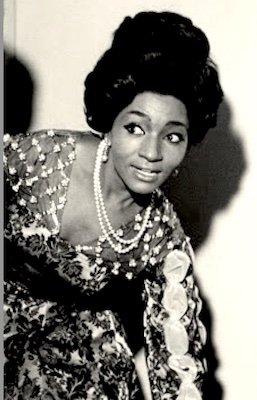
The role of Laura was entrusted to American mezzo-soprano Grace Bumbry. Even though married to the dangerous Alvise, Laura was Gioconda’s rival for Enzo’s love. Bumbry’s Laura was a vocal triumph, especially in the dramatic scene in which she and Gencer’s Gioconda display their rivalry for Enzo’s attention. Gioconda’s temperament changes when she discovers that Laura has the rosary that Gioconda’s mother La Cieca had given an unknown woman who saved her life.
[Photo: Grace Bumbry as Laura; edited image, based on a production photograph, courtesy of the San Francisco Opera.]
This was my second oppotunity to be present at a Bumbry operatic performance, following her brilliant Carmen of the previous season [Historical Performances: An Exciting “Carmen” from Grace Bumbry and Jon Vickers – San Francisco Opera, November 27, 1966.]
Maureen Forrester’s La Cieca
Canadian contralto Maureen Forrester, then 37 years old (and two years younger than Gencer, who played her daughter) gave an arresting performance La Cieca. She gained audience sympathy in her affecting performance of Cieca’s great aria Voce di donna.
[Photo: the blind La Cieca (Maureen Forrester, left) is protected by her daughter, Giocoda (Leyla Gencer, right); edited image, based on a San Francisco Opera production photograph, courtesy of the Leyla Gencer Archives.]

Forrester’s vocal career had been advanced by her selection by Maestro Bruno Walter as the contralto performer on his recordings of Gustav Mahler’s symphonies. Her San Francisco Opera appearance as Cieca was early in the operatic portion of her career, that blossomed in the 1970s and later years. I would see her again a decade and a half later as Madame de la Haltière in Massenet’s “Cendrillon”.
Chester Ludgin’s Barnaba
The opera contains two villains, the conniving Barnaba, an operative for the notorious Inquisition, and that evil agency’s head, Count Alvise, Laura’s murderous spouse.
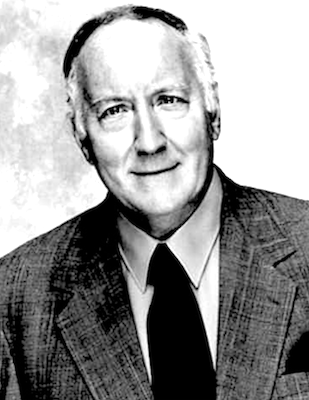
The role of Barnaba was the latest San Francisco Opera role performed by baritone Chester Ludgin, who assumed the role after Peter Glossop whom General Director Kurt Herbert Adler had wanted to perform it, became unavailable. A central “Gioconda” role, it requires a dramatic baritone, which Ludgin had shown in previous San Francisco Opera performances.
Ludgin’s colleagues – Gencer, Cioni, Bumbry and Forrester – brought star power to each of their roles, which I believed overshadowed his otherwise solid Barnaba performance.
[Photo: Bartione Chester Ludgin; edited image, based on an historical photograph.]
Ludgin, whose reputation had been established at the New York City Opera and on Broadway, had proved to be an invaluable presence in the two previous seasonsl. In 1965, he was a dramatically powerful Jack Rance (my favorite Ludgin performance of all) [See Historical Performances: “La Fanciulla del West” with Marie Collier and João Gibin – San Francisco Opera, September 26, 1965].
In 1966, he had saved the day, replacing an ailing George London in all performances of the title role of a Russian masterpiece [See Historical Performances: “Boris Godunov” – San Francisco Opera, October 23, 1966]. Ludgin then took on the title role in a Verdi staple [See Historical Performances: A Pleasing “Rigoletto” From Chester Ludgin, Lee Venora, Ottavio Garaventa and Janis Martin, San Francisco Opera, November 5, 1966 as well as a lead role in the American premiere of an iconic Janacek opera [Historical Performances: Marie Collier Triumphs in American Premiere of Janacek’s “Vec Makropulos” – San Francisco Opera, November 19, 1966.]
Ara Berberian’s Alvise and Other Cast Members
Bass Ara Berberian exuded the villainy and sonorous deep voice required of a successful Alvise.
[Photo: Alvise (Ara Berberian , right) confronts La Cieca (Maureen Forrester, front center) on a charge of sorcery to the horror of her daughter, La Gioconda (Leyla Gencer, front left); edited image, based on a San Francisco Opera production photograph, courtesy of the Leyla Gencer Archives.]

Berberian had made an auspicious San Francisco Opera debut the previous season as Un Frate [Historical Performances – Vickers is “Don Carlo” with Watson, Horne, Glossop and Tozzi – San Francisco Opera, October 1, 1966] and then made a strong impression as Pimen [Historical Performances: “Boris Godunov” – San Francisco Opera, October 23, 1966.] He proved to be an operatic workhorse in both the 1966 and 1967 seasons with other comprimarios bass roles in several operas.
Others in the cast were Allan Monk as Zuàne and John Beauchamp as a Singer, both making their San Francisco Opera debuts. L. David Clements was Isèpo; William Booth was a singer and RIchard Styles, a pilot. Jonathan Hume and Eugene Lawrence were Two Voices.
The San Francisco Opera Ballet
The San Francisco Opera corps de ballet performed the “Gioconda’s” famous Dance of the Hours. Its solo dancers were Sandra Balestracci, David Coll, Diana Marks and John DeVere.
[Photo: A scene from the “La Gioconda” ballet; edited image, based on a San Francisco Opera production photograph, courtesy of the San Francisco Opera Archives.]

Thanks to Walt Disney’s animated film Fantasia and an Allen Sherman novelty song from four years earlier, it is unlikely that many in the audience were unfamiliar with the melodies of the “Dance of the Hours”.
Making his San Francisco Opera debut as the ballet’s choreographer was 35-year old Thomas Andrew (born Edward Thomas Andrulewicz), a former solo dancer with the New York Metropolitan Opera. “Gioconda” was one of six of the season’s operas that Andrew choreographed.’A
I have referred to San Francisco Opera’s 1967 season as the “Year of the Operatic Ballet”. Not only was “Gioconda” performed (which is unthinkable if the famous “Dance of the Hours” ballet were to be excluded), but Andrew also choreographed the “masked ball” which is integral to the drama of Verdi’s “Un Ballo in Maschera” , as well as dancing in Charpentier’s “Louise” and Donizetti’s “L’Elisir d’Amore”.
Andrew also choreographed the the Walpurgis Night ballet in Gounod’s “Faust”, which one sees occasionally. Incredibly, Andrew also choreographed the Witches Cave ballet in Verdi’s “Macbeth” (which has to be considered a once in a lifetime experience),
Maestro Giuseppe Patane and the San Francisco Opera and Chorus
Since having been converted by BIrgit Nilsson, Jon Vickers and Geraint Evans to seeing opera up close at the War Memorial Opera House [Historical Performances: Birgit Nilsson, Jon Vickers, Geraint Evans in “Fidelio” – San Francisco Opera, October 17, 1964], this was my first opportunity to observe the conducting of 35 year old Italian Maestro Giuseppe Patane from my Sunday matinee subscription seats (that I have continued to occupy over the past 57 San Francisco Opera seasons).
Maestro Patane conducted Ponchielli’s enduring work masterfully, with obvious appreciation from the members of the San Francisco Opera Orchestra. Remembered for his encounters with unruly audiences elsewhere, Patane was fated to die conducting opera in Munich 22 years later.

The chorus director of the San Francisco Opera Chorus was Vincenzo Giannini. Madi Bacon directed the San Francisco Opera Boys Chorus. The production, new in 1947, was by designer Armando Agnini, assisted by artist Eugene B. Dunkel.
Having experienced my first “La Gioconda” performance ever, I would be back at the War Memorial the following Friday night for my first ever performance of Verdi’s “Macbeth”.