
I was present at the third of five performances of San Francisco Opera’s presentation of Paul Curran’s production of Wagner’s “Tristan und Isolde”. The production, created in 2012 for the Teatro La Fenice in Venice, incorporated some minor modifications for its presentation in San Francisco. The opera was presented without cuts.
Simon O’Neill’s Tristan and Anja Kampe’s Isolde
New Zealand tenor Simon O’Neill displayed the stamina required for the role of Tristan. O’Neill is universally acknowledged as one of the world’s reigning heldentenors, the category of artists adept at the heavy vocal demands of this and Wagner’s other heroic male lead roles. O’Neill was a was convincing actor, whose command of Tristan’s demanding music was obvious in each of the three acts. This was especially evident in his robust performance of the character’s extensive third act monologue.
[Photo: SImon O’Neill as Tristan; edited image, based on a Cory Weaver photograph, courtesy of the San Francisco Opera.]

This is O’Neill’s third role at San Francisco Opera, preceded by his performances as Mao Zedung [Review: 25 Years Old, “Nixon in China” Arrives at San Francisco Opera, June 8, 2012] and Lohengrin [Review: A Musically, Visually Satisfying “Lohengrin” – San Francisco Opera, October 15, 2023].
It has been 15 years since I first saw O’Neill perform [Review: Summers Leads Sumptiously Sung “Lohengrin” – Houston Grand Opera, November 13, 2009]. This was my second opportunity to review him singing to role of Tristan [see also Review: A Praiseworthy New Mexico “Tristan und Isolde” – Santa Fe Opera, August 5, 2022.] Other roles I have seen him perform include Otello [Review: O’Neill, Pérez and Vratogna Impressive in Houston Grand Opera’s “Otello” – November 1, 2014], Siegmund [Review: Houston “Walküre” Showcases Christine Goerke’s Astonishing Brünnhilde, Karita Mattila’s Stunning Sieglinde – Houston Grand Opera, April 25, 2015] and Siegfried [Review: Houston Grand Opera’s Spectacular “Götterdämmerung”, April 22, 2017.
Performing the role of Isolde was German soprano Anja Kampe, who showed the voice of power that is requisite for this iconic role, and also a voice possessing the warm, sweet sound I describe as bel canto Wagnerian singing. She was a spectacular presence in the opera’s final moments, performing the melody-rich Liebestod, one of Wagner’s supreme dramatic moments.
[Photo: Anja Kampe as Isolde, ready to sing the last act’s Liebestod; edited image, based on a Cory Weaver photograph, courtesy of the San Francisco Opera.]
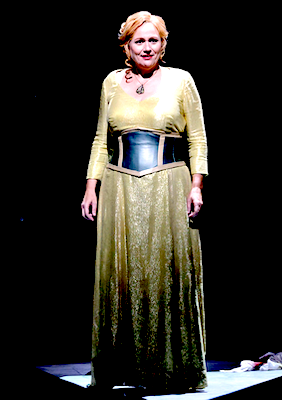
Thirteen years ago Anja Kampe appeared at the San Francisco Opera as Sieglinde in the second opera of Francesca Zambello’s famous production of Wagner’s “RIng of the Nibelung” [Review: Power Singing, Powerful Imagery in Zambello’s “Walküre” – San Francisco Opera, June 15, 2011.]
Although this was my first opportunity to review an Anja Kampe performance in 13 years, I previously had reviewed her Sieglindes in Washington D.C. [Review: Zambello’s Dazzling American Ring ”Walküre” at Kennedy Center – Washington National Opera, March 28, 2007] and Los Angeles [Review: Sonic Splendor – Domingo, Conlon Lead Impressively Sung, Engaging “Walküre” for Los Angeles Opera, April 12, 2009] I also praised her performance in a non-Wagnerian role, Puccini’s Giorgetta [Review: French Connection – Friedkin’s Cinematic “Tabarro”, Los Angeles Opera, September 6, 2008].
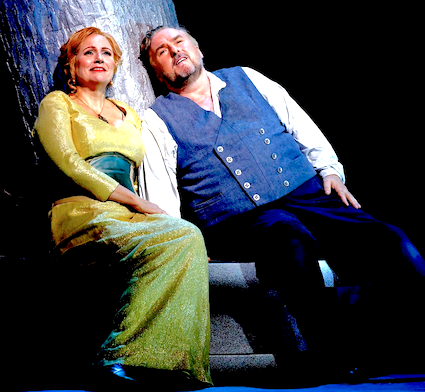
Paired together, Kampe and O’Neill were memorable in their beautifully sung second-act Liebesnacht duet.
[Photo: Isolde (Anja Kampe, left) and Tristan (Simon O’Neill, right) share an evening of love; edited image, based on a Cory Weaver photograph, courtesy of the San Frnacisco Opera.]
Annika Schlicht’s Brangäne and Kwangchul Youn’s Marke
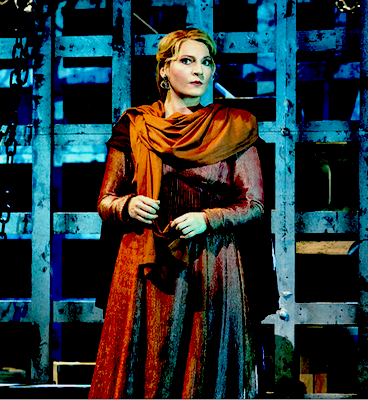
German mezzo-soprano Annika Schlicht, who made her San Francisco Opera debut eight days earlier, made a strking impression as Isolde’s companion, Brangäne. Schlicht possesses a voice of beauty throughout the mezzo range, as well as being an impactful actress.
As Brangäne, disobeying Isolde, but intending to protect her, she substituted a love potion for a death potion. That act of intended kindness had disastrous consequences.
[Photo: Annika Schlicht as Brangäne; edited image, based on a Cory Weaver photograph,, courtesy of the San Francisco Opera.]
South Korean bass Kwangchul Youn, whose San Francisco Opera debut as Sarastro took place a few months prior [Review: Barrie Kosky’s Production of Mozart’s “The Magic Flute” – San Francisco Opera, June 2, 2024] returned as King Marke, one of the roles on which Youn’s international reputation is built. Youn’s attractive, sturdy bass was enlisted for a sympathetic portrait of the king. He conveyed Marke’s feelings of dishonor resulting from the love affair between his intended bride and his most trusted knight.
A 1993 winner of Placido Domingo’s Operalia world competition, Youn has had a long association with the Berlin Staatsoper.
[Photo: Kwangchul Youn as King Marke; edited image, based on a Cory Weaver photograph, courtesy of the San Francisco Opera.]

Wolfgang Koch’s Kurvenal and Other Cast Members
German baritone Wolfgang Koch, vocally strong in his first San Francisco Opera debut role, was a lively presence as Tristan’s fellow Breton, Kurwenal. Koch’s Kurwenal is a central figure in the final act, caring for the dying Tristan, and slaying Tristan’s assassin Melot, before meeting his own death.
[Photo: Wolfgang Koch as Kurwenal; edited image, based on a Cory Weaver photograph, courtesy of the San Francisco Opera.]
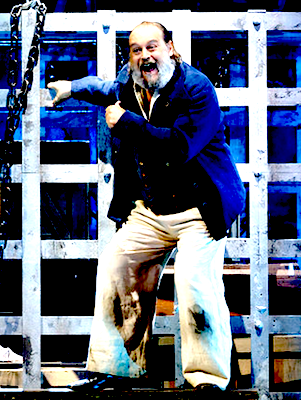
The role of the Steersman was sung, with obviousy heartfelt emotion, by Michigan baritone Samuel Kidd, who had, in the previous month made a strong impression as Cristiano in Verdi’s “Masked Ball” [Review: Michael Fabiano, Lianna Haroutounian Lead a Beautifully Performed, Intelligently Directed “Ballo in Maschera” – San Francisco Opera, September 15, 2024.]
Georgia tenor Christopher Oglesby performed two roles, that of a Shepherd and that of a Sailor. Oglesby is an alumnus of both San Francisco Opera’s young artists’ programs, the Merola and the Adler Fellowship [years 2019-2020]. Earlier this season he performed the role of Offred’s husband, Luke [Review: A Cautionary “Handmaid’s Tale” , San Francisco Opera, September 14, 2024.]
The brief role of Tristan’s killer (and former best friend) Melot was performed skillfully by Welsh tenor Thomas Kinch, in his San Francisco Opera debut. Kinch is a first-year Adler fellow.
Maestra Eun Sun Kim and the San Francisco Opera Orchestra and Chorus
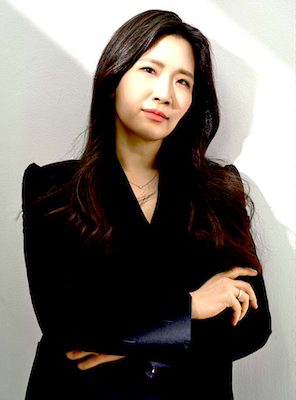
San Francisco Opera’s Music Director, South Korean Maestra Eun Sun Kim, led the San Francisco Opera in a resounding performance of Wagner’s masterpiece. Kim’s command of the score was evident from the ethereal first notes of the orchestral Introduction, through the post-Liebestod rallentando and B major “Tristan” chord that ends the opera.
[Photo: Maestra Eun Sun Kim; edited image, based on a publicity photograph, courtesy of the San Francisco Opera.]
Maestra Kim led a 72-member San Francisco Opera Orchestra and 30-member San Francisco Opera Chorus. The previous evening Kim and the Orchestra, in association with a 72-member San Francisco Opera Chorus, performed Beethoven’s Ninth Symphony. Thus the company showcased two of German music’s greatest masterpieces within a period of 21 hours.
The world-class San Francisco Opera Orchestra performs masterfully throughout the operatic repertory, but this afternoon’s “Tristan und Isolde” demonstrated what a potent force it is in performing the mature works of Wagner.
Pennsylvania Chorus Director John Keene supervises the San Francisco Opera Chorus.
Director Paul Curran
Scottish director Paul Curran, who has identified “Tristan und Isolde” as his favorite opera, makes his San Francisco Opera debut, reviving his Venice “Tristan” production. Curran staged the opera to emphasize the constant references to night and day, and to darkness and light, in Wagner’s metaphor-filled libretto
[Photo: DIrector Paul Curran; edited image of a publicity photograph, courtesy of the San Francisco Opera.]

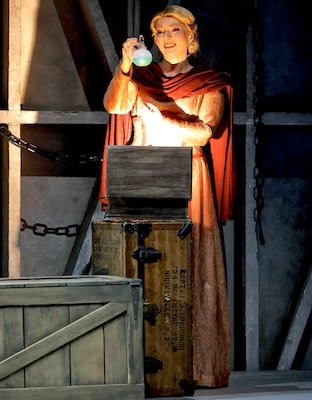
A swinging lamp is seen as the first act curtain opens. When Brangäne goes to the box of elixirs that Isolde’s mother entrusted her with, a light shines from within the box.
[Photo: a light shines from the box Brangäne (Annika Schlicht) opens, which contains the love elixir; edited image, based on a Cory Weaver photograph, courtesy of the San Francisco Opera.]
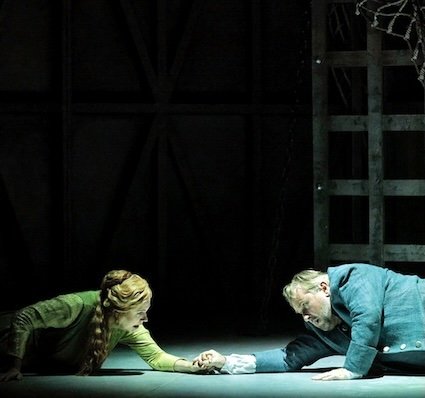
When O’Neill’s Tristan and Kampe’s Isolde first taste the elixir they assume will result in death, both are thrown to the ground. The stage darkens. A single spotlight lights the floor at center stage. Both characters crawl towards the spotlight and clasp hands as they become conscious that a love elixir has replaced what they thought was a fatal poison.
[Below: Thrown to the ground on a darkened stage by the powerful effects of the love elixir Isolde (Anja Kampe, left) and Tristan (SImon O’Neill) join hands in the single onstage spotlight; edited image, based on a Cory Weaver photograph, courtesy of the San Francisco Opera.]
“Tristan” is the eighth opera production that I have reviewed that Curran directed. Previous Curran productions reviewed on this site are the following from the Santa Fe Opera by composers Britten [Review: Superlative – Original 1951 “Billy Budd” Catches the Santa Fe Opera Wind, August 14, 2008, Puccini [Review: David Lomeli, Ana María Martínez Shine in Deeply Cast “La Boheme” – Santa Fe Opera, July 2, 2011], Donizetti [Review: Rossini Royalty – DiDonato, Brownlee, Pizzolato and Barbera in Curran’s Staging of “Donna Del Lago” – Santa Fe Opera, July 26, 2013] and Rimsky-Korsakov [Review: Santa Fe Opera’s Glistening “Golden Cockerel” Starring Venera Gimadieva – July 28, 2017].
I also reviewed Curran productions mounted at the Lyric Opera of Chicago [Review:”Lulu” at the Lyric – Chicago, November 19, 2008], at the Los Angeles Opera [Review: Countdown to the Britten Centennial: Conductor James Conlon, Director Paul Curran in Reverential Mounting of Britten’s “Albert Herring” – Los Angeles Opera, February 25, 2012] and at The Dallas Opera [World Premiere Review: A Lavish Dallas Opera Production for Mark Adamo’s “Becoming Santa Claus” – December 4, 2015].
See also my interviews: Telling the Story: An Interview with Director Paul Curran and The State of Opera Production in a Worldwide Pandemic: A Conversation with Director Paul Curran.
Robert Innes Hopkins’ Scenic Design
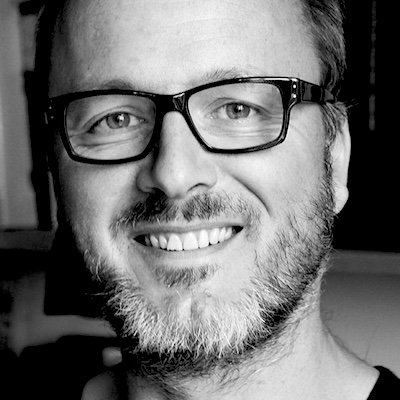
English designer Robert Innes Hopkins created the scenic design for the original Venice production, that, with minor revisions, is the setting for the San Francisco Opera production revival.
[Below: Designer Robert Innes Hopkins; edited image, based on a publicity photograph from the Lyric Opera of Chicago.]
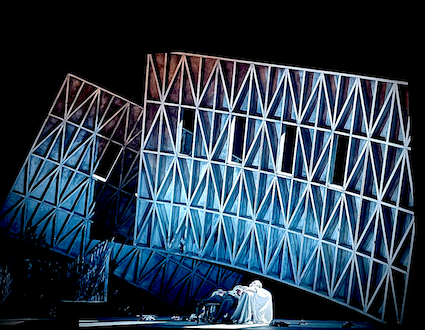
The sets for the first act represents an abstraction of the sailing ship on which the Irish royal Isolde is being transported to Cornwall to become King Marke’s bride. The structural pieces that represent the ship’s hull are repositioned for the third act to represent Tristan’s ancestral Breton castle of Kareol.
[Below: Robert Innes Hopkins sets for Act III of “Tristan und Isikde”; edited image, based on a Cory Weaver photograph, courtesy of the San Francisco Opera.]
THe second act consists of outlying buildings of King Marke’s estates, including the representation of a tree beneath which Tristan and Isolde sing of their love for one another.
[Below: Robert Innes Hopkins’ Act II sets for “Tristan und Isolde”; edited image, based on a Cory Weaver photograph, courtesy of the San Francisco Opera.]

Although Hopkins’ sets were first seen at the San Francisco Opera in operas by Janacek and Rossini two decades ago [Review: San Francisco Opera Mounts Santa Fe Opera’s “L’Italiana in Algeri”, September 30, 2005], in recent years, Hopkins has been associated with new San Francisco Opera productions of “Tosca” [Review: An Appealing New “Tosca” for San Francisco Opera, October 3, 2018] and “La Traviata” [Review: “La Traviata” Delightful New Production, Well-Received Debuts by Yende, Tetelman and Piazzola – San Francisco Opera, November 22, 2022] and the importation of Daniel Slater production of Donizetti’s most famous opera buffo. [Review: Donizetti’s Delightful, ‘Must See’ “Elixir of Love” Starring Pene Pati and Slatka Zamecnikova – San Francisco Opera, November 19, 2023].
Final Thoughts
The San Francisco Opera demonstrated its mastery of Wagnerian opera, through its mounting of Paul Curran’s production of “Tristan und Isolde”, with a world-class cast and extraordinary orchestral and choral performances, led by Maestra Eun Sun Kim.