
In an unprecedented evening in San Francisco Opera history, instead of an operatic performance, the San Francisco Opera scheduled a performance of Ludwig von Beethoven’s Symphony Number Nine. The sold-out performance celebrated the 200th anniversary year of the Ninth Symphony’s first performance in May, 1824.
“The Ninth” is an epochal contribution to the format of the “symphony”. The last of its four movements is the first symphonic work to incorporate vocal music. In this performance, that vocal music consisted of a 72 member chorus (under the leadership of Pennsylvania Chorus Master John Keene) and four soloists of international rank performing vocal music set to dramatist Friedrich Schiller’s poem “Ode to Joy”.
Maestra Eun Sun Kim and the San Francisco Opera Orchestra and Chorus
For this performance, the San Francisco Opera Orchestra was moved from the orchestra pit to the stage itself. The orchestra, chorus and soloists all performed in front of a recently constructed Concert Shell, consisting of 12 individual 24 foot-high panels and four panels hanging overhead. This was the first San Francisco Opera performance in which the completed Concert Shell was used.
[Photo: the San Francisco Opera Orchestra, Chorus and Soloists perform on the War Memorial Opera House stage surrounded by a 12 panel Concert Shell, a gift of donors Jerome and Thao Dodson.]
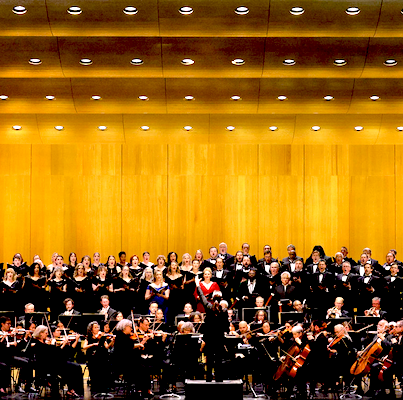
Maestra Eun Sun Kim, the San Francisco Opera’s Music Director, led the San Francisco Opera Orchestra in a reverential performance of the symphony’s first three movements, a 15 minute Allegro ma non troppo, then a 12 minute Scherzo, followed by a 16 minute Adagio. The order that Beethoven chose for these three movements are themselves a departure from then existing formulaic symphonic rules that required that a slow movement, like an adagio, must be the second movement, with a scherzo in third place.
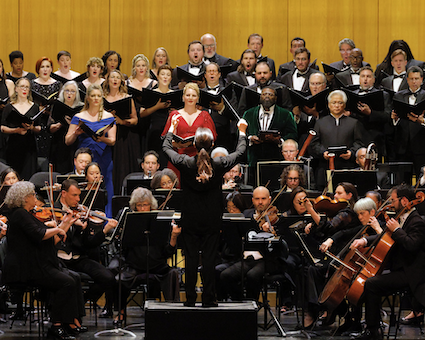
After the first three movements there was a pause in the performance. During that pause, 72 members of the San Francisco Opera Chorus and the evening’s four soloists filed onstage to stand behind the orchestra.
[Photo: Maestra Eun Sun Kim (front center. back to audience), leads the San Francisco Opera Orchestra and Chorus and four principal vocalists in the “Ode to Joy”; edited image, based on a Cory Weaver photograph, courtesy of the San Francisco Opera.]
The Four Soloists
In the 24 minutes of the final movement, the chorus and four soloists brilliantly performed Beethoven’s “Ode to Joy” melody. Unlike an operatic performance, in which principal singers have extensive musical passages, usually including solo arias, the Soprano, Mezzo-Soprano, Tenor and Bass arrive for what is a relatively brief musical appearance. The vocal passages they sing in those brief moments are among the greatest in the history of music. Each soloist sang exuberantly, alternating with the chorus and their soloist colleagues. Assembling four international artists of the reputation and accomplishments of these four soloists is an impressive example of “luxury casting”.
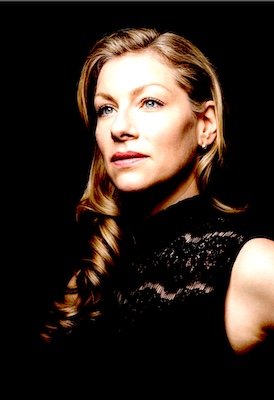
Georgia soprano Jennifer Holloway was the solo Soprano. I had first reviewed Holloway performances, beginning 15 years ago, in the mezzo-soprano roles of Princess Irene in Los Angeles [Review: Domingo’s Towering “Tamerlano” Bajazet -Los Angeles Opera, November 22, 2009], Dorabella in Dallas [Review: Bel Canto “Cosi fan Tutte” at Dallas Opera – February 18, 2010] and Siebel.in Santa Fe [Review: Santa Fe Opera Gets Gounod At Last – Hymel, Pérez Soar in Spectacular New Production of “Faust” – July 1, 2011]. Subsequently, her repurtation was secured in Europe, extending her range of roles into the dramatic soprano category.
[Photo: Jennifer Holloway as the Soprano Soloist; edited image, based on a Simon Pauly photograph, for Arsis Artist Management.]
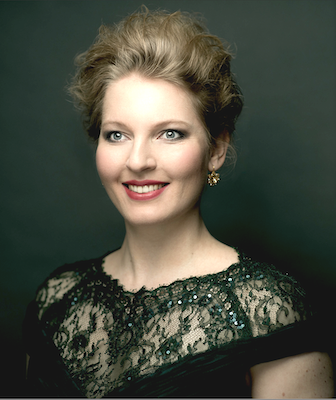
The mezzo-soprano soloist was German artist Annika Schlicht. The artist’s San Francisco Opera debut as Brangäne in “Tristan und Isolde” occurred a week prior, joining “Beethoven’s ‘Ninth’s” bass, Kwangchul Youn, who sang the “Tristan” role of King Marke. Schlicht’s and Youn’s Brangäne and Marke were repeated four nights later and would have a third performance the afternoon following this evening’s performance of Beethoven’s masterpiece [Review: ONeill and Kampe Lead a Powerfully Performed “Tristan und Isolde” – San Francisco Opera, October 27, 2024].
[Photo: Mezzo-soprano Annika Schlicht; edited image, based on a Simon Pauly photograph, courtesy of the San Francisco Opera.]
Youn’s own San Francisco Opera debut as Sarastro had taken place four month’s earlier [Review: Barrie Kosky’s Production of Mozart’s “The Magic Flute” – San Francisco Opera, June 2, 2024].
[Photo: Kwangchul Yuon; edited image from Royal Opera House Royal Ballet and Opera flickr.com.]
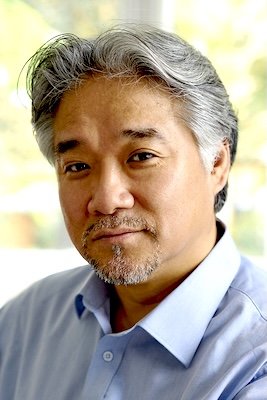
The most familiar artist to San Francisco Opera audiences was tenor Russell Thomas who previously performed at San Francisco Opera as Pollione [A Second Look Review: “Norma” at the San Francisco Opera – September 14, 2014] and Devereux [Review: World’s Best Ever “Roberto Devereux” Performance: Radvanovsky, Thomas, Barton, Frizza – San Francisco Opera, September 8, 2018]. Few operatic tenors can list two Beethoven roles in their performance resume for a single company, but Thomas has now sung both Florestan [Review: Beethoven’s “Fidelio”, An Excellent Cast for Matthew Ozawa’s Powerful Production – San Francisco Opera, October 17, 2021] and the Tenor role in the Ninth Symphony for the San Francisco Opera.
[Photo: Tenor Russell Thomas; edited image, from a Facebook photo, posted at www.russellthomastenor.com.]
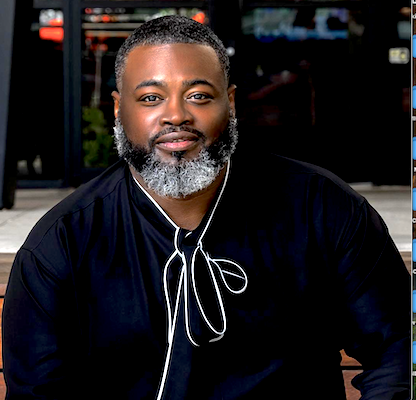
Although the evening was the first time that the San Francisco Opera performed the complete Beethoven Ninth, it was second time that the company had performed the “Ode to Joy” fourth movement. In 1995 it was performed for the 50th anniversary of the formal adoption of the United Nations Charter at the War Memorial Opera House on June 25, 1945. The San Francisco Opera Orchestra, Chorus and four soloists from the 1995 Merola Young Artists’ program – Claudia Waite, Elizabeth Bishop, Alfred Portillo and Chester Patton – were the performers.
Notes from the History of the San Francisco Opera Orchestra
Now in its 102nd year, the San Francisco Opera Orchestra was created by the company’s founding general director, Italian-born conductor Gaetano Merola, in 1922. A decade later the company moved into the newly built War Memorial Opera House, sharing the building with the San Francisco Symphony, an organization that was created in 1911.
In 1933, Merola, wishing to have dancers trained for San Francisco Opera performance, created the San Francisco Opera Ballet. The mission of the new ballet organization expanded in time to become an independent company. The San Francisco Opera, Symphony and Ballet shared the War Memorial Opera House until 1980 when the Louise Davies Symphony Hall opened across the street from the War Memorial. Only the ballet and opera companies presently perform in the War Memorial Opera House.
When the three artistic organizations were based at the War Memorial, there was a close relationship between the San Francisco Symphony and the Opera Orchestra. Many of the Symphony’s members would perform with the Opera Orchestra as well. The year 1980, the penultimate year of the general directorship of San Francisco Opera’s Kurt Herbert Adler, was the beginning of a major period of transition, which ultimately resulted in an opera orchestra with permanent positions, including the opera’s leader, its concertmeister. Within the decade the administrative position of Music Director also was formally established.
History of the San Francisco Opera Music Director Role
During the first 58 years of San Francisco Opera’s history, the company’s general director position was held by two conductors, the company’s founder, Italian conductor Gaetano Merola (1923-1953), and Austrian conductor Kurt Herbert Adler (1955-1981). In the mid-1980s, the administrative position of San Francisco Opera Music Director was formally established. The first Music Director was English conductor Sir John Pritchard (1985-1989), the second was Scottish conductor Sir Donald Runnicles (1992-2009) and the third was Italian conductor Nicola Luisotti (2009-2019).
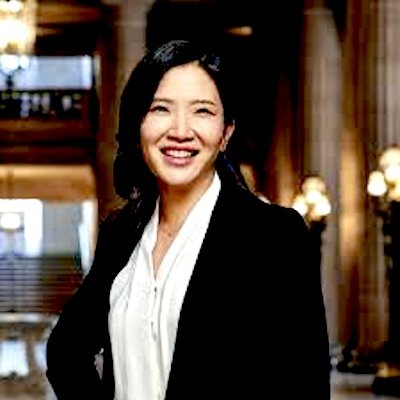
South Korean Maestra Kim is the fourth Music Director in San Francisco Opera history. This evening’s performance provided an opportunity to celebrate the extension of the company’s contract with San Francisco Opera’s Music Director, Maestra Eun Sun Kim, for another five years to the 2030-31 season.
[Photo: Maestra Eun Sun Kim in the front lobby of San Francisco’s War Memorial Opera House; edited image of an Instagram photograph.]
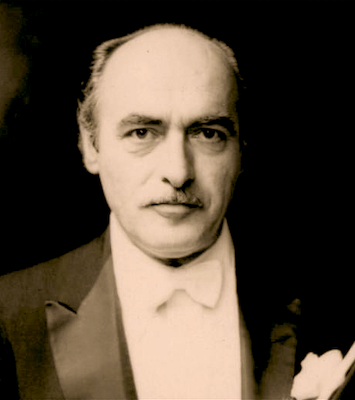
One of the persons instrumental in the evolution of the San Francisco Opera Orchestra into its current organization was violinist Zaven Melikian, of Armenian heritage (whose death occurred in February, 2024). Alternating roles as Concertmeister and Assistant Concertmeister on an hoc basis early in the 1970s, Melikian was an important figure in establishing the rules governing the orchestra’s membership and working processes. (Melikian is one of a unique group of artists who have been presented the San Francisco Opera Medal).
[Photo: San Francisco Opera Concertmeister Zaven Melikian for the years 1977-1994; edited image, based on a Robert Messick photograph, for the San Francisco Opera.]
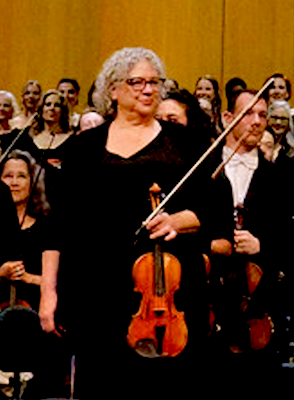
In 1994, Melikian was succeeded as concertmeister by the position’s current occupant, Ohio violinist Kay Stern. For the past half century, the combined tenures of Melikian and Stern, each working closely with the company’s contemporaneous Music Directors appointed during this period have helped an already excellent opera orchestra increase its prestige internationally.
[Photo: Concertmeister Kay Stern; edited image, based on a photograph, courtesy of the San Francisco Opera.]
This evening met the world class performance standards one expects of Maestra Kim, the San Francisco Opera Orchestra and Chorus and the four distinguished soloists. This was only the first part of my weekend of observing and hearing the San Francisco Opera Orchestra and Chorus perform two of the greatest masterpieces of German music. I returned 16 hours later for the spectacular orchestral, choral and individual vocal performances described in my review of Wagner’s “Tristan und Isolde”, cited above, also conducted by Maestra Kim.