“Mary Queen of Scots” is the second offering of the San Francisco Opera’s 2026-27 season. Composer Thea Musgrave’s 1977 opera is a foray into mid-16th century Scottish history during the Stuart (Steward) dynasty. The opera is set in the economically depressed Scotland of the year 1561 through 1567, when the country was both religiously and politically split between Roman Catholics and Presbyterian Protestants.
Mary was a direct descendant of England’s first Tudor king, Henry VII, and the only child of Scotland’s King James V, thus having legitimate claims to the crowns of both Scotland and England.
From infancy, Mary had been a pawn of Catholic forces. Mary had been crowned Queen of Scots a few months after the death of her father. Anti-Protestant factions in France and Scotland arranged for her bethrothal to the Dauphin (the heir to the Kingdom of France) when they were both young children. They married as young teenagers, and Mary became Queen Consort to the young King Francis II at his father’s death. Francis II’s reign was short-lived. At 18, upon the death of Francis II, Mary became France’s dowager queen.
The strong presence of Presbyterianism in Scotland caused anti-Protestant forces to assert Mary as Scotland’s legitimate sovereign. The opera takes place during the years between 1561, when Mary arrives as Scotland’s monarch, and 1567, when she was forced to abdicate the throne and escape to England.
The opera is principally concerned with Mary’s relationships with three Scottish men – the Earl of Moray (James Stewart, the bastard son of her deceased father, James V), her cousin and second husband, Lord Darnley, (who, like Mary, has a claim to the English throne – occupied by Elizabeth I) and Mary’s third husband, the Earl of Bothwell.
Heidi Stober as Mary, Queen of Scots
[Photo: Heidi Stober as Mary, Queen of Scots; edited image, based on a Matthew Washburn photograph, courtesy of the San Francisco Opera.]
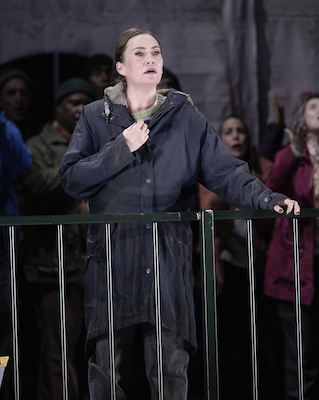
The title character was performed by Wisconsin soprano Heidi Stober, an artist for whom many performance reviews are posted on this website (see below).
As the opera progresses, Stober’s performance takes on the power and vocal intensity of a dramatic soprano. Stober’s Mary holds her own in negotiations with powerful men. Stober convincingly displays Mary’s emotional state as the Earl of Moray offers her protection in exchange for her favoring his pollitical ambitions. Stober exudes passion in portraying Mary being charmed by her cousin, Lord Darnley. Stober enuciates her character’s rage at Darnley’s drunkeness. Darnley’s murder of her Catholic advisor, David Riccio invokes Mary’s fury, which Stober shows with vocal and dramatic effectiveness.
In the years since Stober’s San Francisco Opera debut as Sophie [Review: “Werther” Re-invented, Yet Again – Francisco Negrin’s New Production at San Francisco Opera, September 15, 2010] ], she performed 14 different roles over the course of 11 seasons. These included such varied roles as Magnolia Hawkes [Review: Aboard San Francisco Opera’s “Show Boat”: Showy Cast, Abundant Show-stoppers – June 1, 2014], Gretel [Review: A “Must See” San Francisco Opera Production of “Hansel and Gretel”- November 17, 2019] and Blanche de la Force [Review: “Dialogues of the Carmelites” Returns to San Francisco Opera in Olivier Py’s Dark, Theatrically Absorbing Production – October 15, 2022].
In addition to her many fine San Francisco Opera performances, I have praised Stober’s work in four productions at the Santa Fe Opera, including her Zdenka [Review: Erin Wall, Mark Delavan Are Superb in Elegant New Production of “Arabella” – Santa Fe Opera, August 1, 2012] and three productions at the Houston Grand Opera, including her Cleopatra [Review: Houston Grand Opera’s Resilient “Julius Caesar” Showcases Anthony Roth Costanzo and Stellar Cast – October 27, 2017]..
Thomas Mole as James Stewart, Earl of Moray
[Photo: Thomas Mole as James Stewart; edited image, based on a Matthew Washburn photograph, courtesy of the San Francisco Opera.]
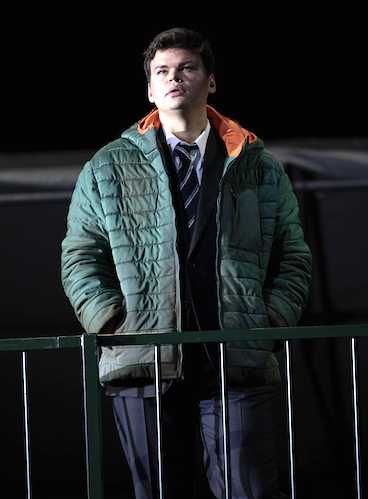
British lyric baritone Thomas Mole was a strong presence as James Stewart, Queen Mary’s half-brother as James V’s bastard son. Throughout the opera Mole created mannerisms that suggested Steward’s abilities to convince Mary and others in the causes he advances, while suggesting that Stewart was often duplicitous in his interactions with others.
Mole possesses a large, smooth baritone voice with power down to the bass range. An ensemble artist of Munich’s Bayerische Staatsoper, Mole is gaining international visibility, named by the United Kingdom’s “The Telegraph” as one of the world’s ten most exciting young musicians.
One of only two principal cast members making his San Francisco Opera debut this season, Mole returns to the company later this fall as Count Almaviva in Mozart’s “Marriage of Figaro”. He also is scheduled to perform in two of the Santa Fe Opera’s 2027 season offerings.
Christopher Sokolowski as Henry, Lord Darnley
[Phoro: Christopher Sokolowski as Lord Darnley; edited image, based on a Matthew Washburn photograph, courtesy of the San Francisco Opera.]
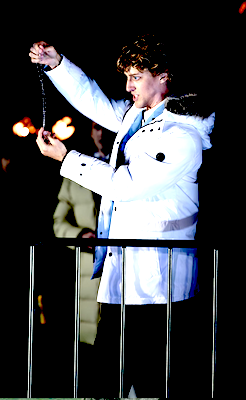
New York tenor Christopher Sokolowsi makes his San Francisco Opera debut as Lord Darnley. Sokolowski possesses a vibrant, attractive tenor voice. He showed dramatic skill in portraying a complex character. Sokolowski was convincing in portraying Darnley’s success in charming Mary into marrying him.
Sokolowski does a masterful job in portraying Darnley’s reaction to Mary’s resistance to Darnley’s insistence that Mary make him King of Scotland to rule beside her. Sokolowski projects Darnley’s sudden rage when Darnley murders Mary’s Catholic advisor David Riccio, leading to Darnley’s downfall and death.
Like baritone Mole, this is tenor Sokolowski San Francisco Opera debut season. He also has been cast in two of this company’s future performances. Recognized for his achievements in the father-son ‘jugendlicher heldentenor’ roles as Parsifal and Lohengrin, Sokolowski has been announced for the San Fracisco Opera’s “Ring of the Nibelung” performances.
He will sing the ‘jugendlicher’ roles of Froh in “Das Rheingold” and Siegmund in “Die Walkure”. Sokolowski also has gained prestige through beomg cast as the Shepherd in centennial celebration performances of Karol Szymanowski’s “King Roger”.
Thomas Kinch as James Hepburn, Earl of Boswell
[Photo: Thomas Kinch as the Earl of Boswell; edited image, based on a Matthew Washburn photograph, courtesy of the San Francisco Opera.]
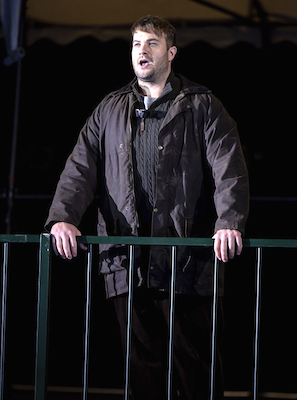
Welsh tenor Thomas Kinch appears as the enigmatic Protestant leader, the Earl of Bothwell, in his most ambitious performance, vocally and dramatically, for the San Francisco Opera to date. Kinch impressively presented his character’s pomposity and misogyny, including the character’s assault on Mary sexually.
Possessing a Masters degree in Opera Performance at the Royal Conservatoire of Scotland. Kinch has participated in San Francisco Opera’s 2023 Merola program and was a 2024/25 and 2025/26 Adler Fellow,. Among the several roles that he performed during his fellowships was a praiseworthy appearance as Melot [Review: O’Neill and Kampe Lead a Powerfully Performed “Tristan und Isolde” – San Francisco Opera, October 27, 2024].
Hadleigh Adams as David Riccio
[Photo: Hadleigh Adams; edited image, based on a photograph, courtesy of the San Francisco Opera.]
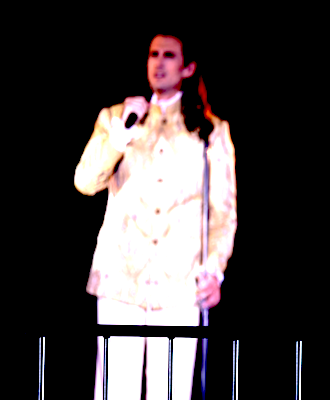
New Zealand baritone Hadleigh Adams was Mary’s Catholic mentor, David Riccio. As Riccio, Adams brilliantly performed for Stober’s Mary in a musical and dance interlude with Mary’s ladies-in-waiting. The beauty and lyricism of Adams’ voice was a performance highlight. Adams convincingly showed Riccio’s emnity at the grotesque behavior of Mary’s husband Darnley, which led to his death at Darnley’s hand.
Adams, a 2014 Adler Fellow, made his San Francisco Opera debut in the 2012/13 season. He has specialized in the character baritone roles, singing 20 roles over eight of the company’s seasons.
Adams’ Riccio is another brilliant San Francisco Opera performance, matching his outrageously costumed appearance as Ormonte [Review: A Brilliant Production and Strong Performance of Handel’s “Partenope” – San Francisco Opera, June 23, 2024].
Philip Skinner as Lord Gordon
[Photo: Philip Skinner as Lord Gordon; edited image, based on a Matthew Washburn photograph, courtesy of the San Francisco Opera.]
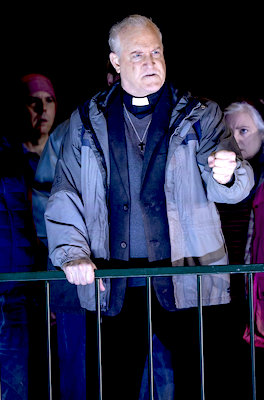
Florida bass-baritone Philip Skinner was Lord Gordon, a character “invented” by composer/librettist Musgrave. His character supports Mary’s reign and attempts to rally the Scottish people in support of her. Skinner, a veteran San Francisco Opera ‘comprimario’ artist, sang and acted the role with distinction
Skinner, as part of the San Francisco Opera centennial year, was one of three artists each to receive a San Francisco Opera medal for most performances in San Francisco Opera history. Since his San Francisco Opera debut in 1985, Skinner has appeared in multiple roles over 29 of the company’s seasons.
Other Cast Members
[Photo: Cardinal Beaton (David Soar, center) is led away by the Earl of Morton (Olivier Zerouali, left) and the Earl of Ruthven (Chance Jonas-O’Toole, right); edited image, based on a Matthew Washburn photograph, courtesy of the San Francisco Opera.]
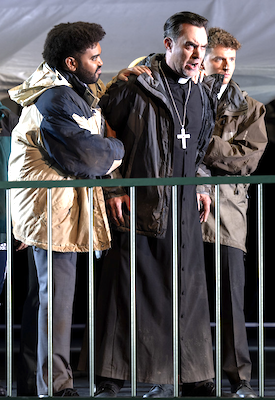
British bass David Soar performed the role of Cardinal Beaton. Delaware baritone Olivier Zeroualli was the Earl of Morton. Texas tenor Chance Jonas O’toole was the Earl of Ruthven.
Minnesota mezzo-soprano Sadie Cheslak was Mary Seton. Canadian soprano Alexa Franklin was Mary Fleming. Minnesota baritone William Lee Bryan and Pennsylvania Michael Jankosky were Lords and Virginia mezzo-soprano Sally Mouzon was a Crowd Member.
Conductor Clelia Cafiero and the San Francisco Opera Orchestra and Chorus
[Photo: Maestra Clelia Cafiero; edited image, based on a Cyril Cosson photograph, courtesy of the San Francisco Opera.]
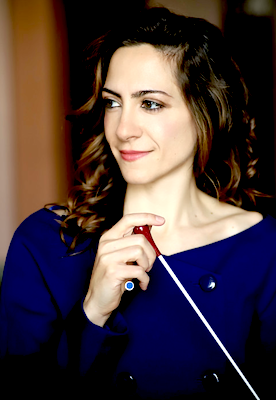
Italian Maestra Clelia Cafiero led an enlarged San Francisco Opera Orchestra in an authoritative reading of composer Thea Musgrave’s score, expertly performed by the Orchestra’s musicians.
In her San Francisco Opera debut season, Cafiero draws two of the six scheduled operas – this Fall’s “Mary, Queen of Scots” and next Spring/Summer’s performances of Puccini’s “Tosca”.
The San Francisco Opera Chorus members, under the direction of Pennsylvania Chorus Master John Keene were an imposing musical presence.
Production Designer and Director Stewart Laing
[Photo: Production designer Stewart Laing; edited image of a Tommy Ga-Wan photograph, courtesy of the San Franciscvo Opera.]
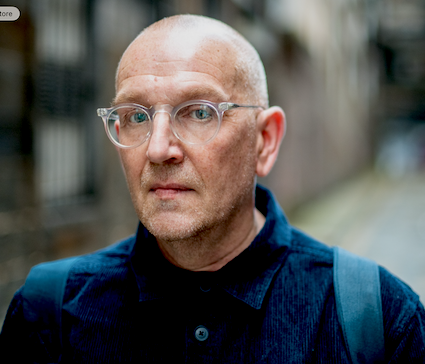
Scottish production designer Stewart Laing created a modern set, raised above the stage. In the front is a fence between the audience and a pathway that various characters traverse. The background is a large “special events” tent.
The characters wore modern clothes, including parkas and other winter outerwear.
The choreography of the dance sequences, by Irish director Colm Seery, deserves special praise.
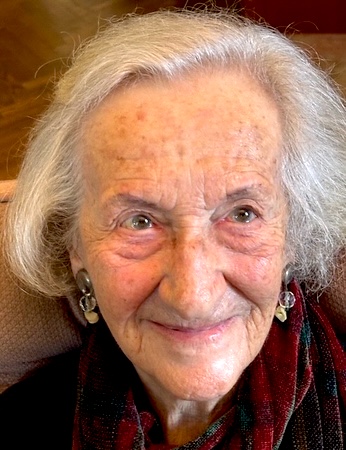
Composer and Librettist Thea Musgrave
[Photo: Composer Thea Musgrave; edited image, based on a photograph, courtesy of the San Francisco Opera.]
During the 2022/23 centennial season of the San Francisco Opera, the company mounted two productions of operas associated with the innovative regime of the company’s second general director, Kurt Herbert Adler (1954-1981) – American premieres of works by Poulenc and Richard Strauss [Review: A Colorful, Brilliantly Performed “Frau ohne Schatten” – San Francisco Opera, June 4, 2023].
Scottish composer and librettist Thea Musgrave also is associated with the Adler era, whose 1979 performances of her most important musical work, “Mary, Queen of Scots”, received its West Coast premiere as part of the company’s Spring Opera Theater [SPOT].
Musgrave became the first female composer to have a work mounted by the company. She also conducted her opera, becoming the first female conductor in company history.
When San Francisco Opera’s current General Director Matthew Shilvock learned of the English National Opera’s plans to revive Musgrave’s work, he arranged for the San Francisco Opera to become a co-producer of the revival production.
Final Thoughts
I am an advocate of opera companies revisting works that had promising receptions at their premieres and early years. If one uses the criterion that a successful opera is one that has achieved a place in the international performance repertory, only a very few operas in history can be considered a success.
The co-production between the English National Opera and the San Francisco Opera is a praiseworthy effort. It is to be seen whether the opera’s revival a half century after its composition will ultimately prove long-lasting.